I visited Bonsaiya Abe around a year ago, and was lucky enough to spend time talking to Daiki Abe, the 3rd generation of the Abe family to be involved in growing bonsai trees.
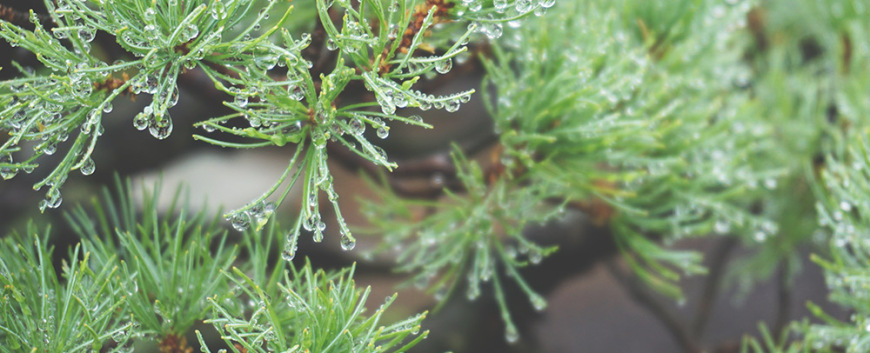
The Abe family have been cultivating Goyomatsu (Japanese White Pine) bonsai trees for over 90 years.
Kurakichi Abe began growing bonsai from seed nearly 100 years ago after a visit to the Azuma Mountains in Fukushima City, where he felt overwhelmed and moved by the grandeur and sublime beauty of the mountains.
Kurakichi was inspired by the ancient trees that inhabited the mountain side, and coined the term ‘Kukan Yubi’, which translates into English as ‘The Beauty of Space’, as a way of describing the beauty of the shapes and spaces created when trees grow old.
Although over the years many bonsai cultivators have favoured the aesthetics of neat, perfect-looking trees – some even masking one type of tree as another through forcing it to grow in certain way – Kurakichi was so impressed by the natural splendor of the pine trees he found in the Azuma Mountains that he felt it imperative to portray the natural shapes of windswept trunks, exposed roots, bare bark and all the negative space apparent in the ancient trees in his bonsai.
He acknowledged that to others, his trees may appear to be dishevelled and not profitable in the slightest, but to him, they represented one of the most beautiful things in the world. He found confidence in the idea that “As long as you have created something good, even if you don’t try and sell it, it will sell”, and he wasn’t wrong.;
When Kurakichi Abe first began cultivating bonsai, people were allowed to freely take resources such as wood from the Azuma Mountains – something which Kurakichi himself took advantage of – something that the current generation living in Fukushima find quite difficult to believe. Nowadays, the Abe family enjoy special permission to get collect seeds from inside the national park which encompasses the Azuma Mountains.
The oldest bonsai tree in Abe’s care is 89 years old. Even during war time, and the strict regulations that the war had on the lifestyles of Japanese citizens, the Abes continued to care for their bonsai trees and give them the bare minimum of care to control their growth.
When I visited Bonsaiya Abe, I was really moved by hearing about the age of some of the trees there.
I know, of course, that trees can live for hundreds of years, but before visiting Bonsaiya Abe, I’d never really contemplated the idea of something that need as much care and love as a bonsai tree passing from generation to generation.
When Daiki Abe trims and waters the 90-year-old trees in the garden, he is continuing the work of his grandfather, touching the same branches that he touched – these bonsai trees connect the generations of his family in a way that few family heirlooms can.
One of the most important aspects the Kukan Yubi philosophy of growing bonsai trees is patiently planning and creating spaces in certain places of the tree that mirror the Japanese White Pines that have been growing freely on the Azuma Mountains for centuries. It is fantastic being able to see the various stages of this process at Bonsaiya Abe, from new sapling trees right through to those that have been alive close to 50 years before Daiki Abe was born.
Visiting Bonsaiya Abe
You can visit Bonsaiya Abe if you make an appointment by phone (024-591-1638) (Japanese-language only). To make the most of your visit to Bonsaiya Abe, I would recommend visiting with a Japanese-speaking friend who can translate what Abe san speaks about during your visit.
You can also do a Kokedama (moss-ball) decorating experience at Bonsaiya Abe. You need to book this 2 weeks in advance via the Fukushima City Convention Association, and Abe san is currently only accepting bookings from groups of 5 people. This workshop will also be held in Japanese only.
Location:
Bonsaiya Abe also has a Facebook Page & Instagram Page.
You can also read more about Kurakichi Abe’s concept of Kukan Yubi in English here.
What did you think about this post?
If you liked it, please leave a comment and sign up for email updates here!


I love this! We were able to live in Japan for a couple years but never made it up to Fukushima. Thanks for sharing!
LikeLiked by 1 person
Thank you for the comment!! I hope you get to visit Fukushima the next time you come over to Japan!
LikeLiked by 1 person
This is fascinating, thanks for sharing!
LikeLiked by 1 person
Thank you for your lovely comment!
LikeLiked by 1 person
A wonderful article! 💚
LikeLiked by 1 person
Thank you!
LikeLike
Bonsai trees are beautiful! http://Www.caloveline.com
LikeLiked by 1 person
Yes, they are!
LikeLike
Nice article
LikeLiked by 1 person
Thank you!
LikeLike
Reblogged this on Anodina Bolg.
LikeLiked by 1 person
Thank you!!
LikeLike
Thanks. This is a really cool feature article.
LikeLiked by 1 person
Thank you so much!
LikeLike
I always loved bonsai trees. Awesome pictures!
LikeLiked by 1 person
Thank you!
LikeLike
I am fascinated with bonsai- and would never, under any circumstances, adopt a live one; for its own well being. But I sure do love them.
LikeLiked by 1 person
I feel the same after 1 failed attempt!!
LikeLike
Reblogged this on VIRTUAL BORSCHT.
LikeLiked by 1 person
Thank you for the reblog!
LikeLike
Reblogged this on Wolf's Birding and Bonsai Blog.
LikeLike
Thank you for reblogging this post!
LikeLike